




What are the uses of potassium aluminium fluoride in the fuel industry?
 Jan 05, 2026|
 Potassium aluminium fluoride, often referred to by its chemical formula KAlF₄, is a versatile compound with a wide array of applications across various industries. In the fuel industry specifically, it plays several crucial roles that contribute to the efficiency, safety, and performance of fuel - related processes. As a reputable supplier of potassium aluminium fluoride, I am delighted to delve into the significant uses of this compound in the fuel sector.
Catalytic Applications in Fuel Production
One of the primary uses of potassium aluminium fluoride in the fuel industry is its role as a catalyst. In hydrocarbon refining processes, such as cracking and reforming, catalysts are essential to break down complex hydrocarbon molecules into simpler and more valuable ones. Potassium aluminium fluoride can act as a Lewis acid catalyst, facilitating chemical reactions that are vital for producing high - quality fuels.
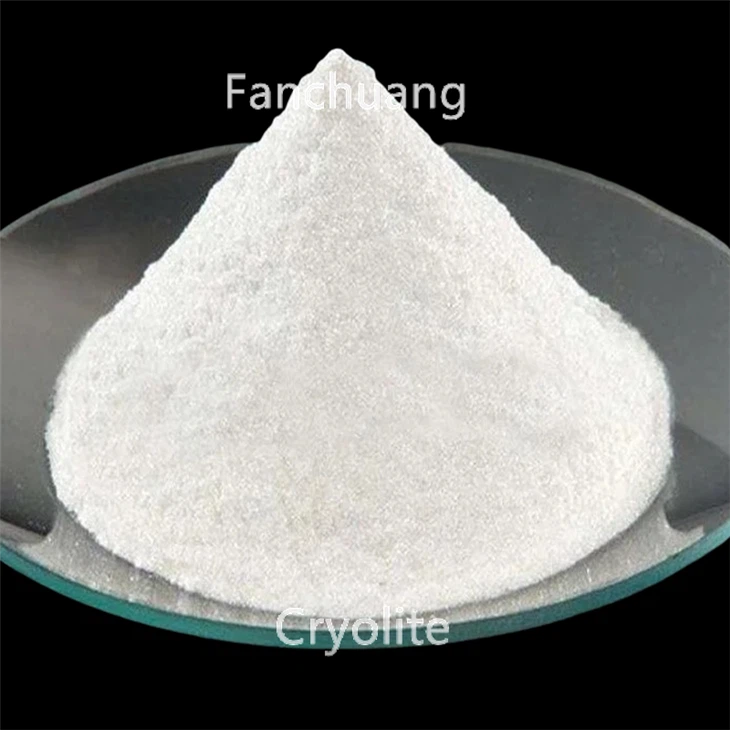

In catalytic cracking, large hydrocarbon molecules are broken into smaller alkanes and alkenes, which are more suitable for use in gasoline, diesel, and jet fuels. The presence of potassium aluminium fluoride enhances the reaction rate and selectivity. It can attract and hold reactant molecules via its Lewis acid sites, orienting them in a way that promotes the desired cracking reaction. This leads to an increased yield of light hydrocarbons, which are in high demand for fuel production.
Moreover, in reforming processes, the goal is to improve the octane rating of gasoline or produce aromatics. Potassium aluminium fluoride can contribute to the rearrangement of hydrocarbon molecules, converting straight - chain alkanes into branched - chain alkanes and cycloalkanes. This not only improves the antiknock properties of gasoline but also provides valuable feedstock for the petrochemical industry. Check out Potassium Aluminium Fluoride PAF to learn more about the product details.
Desulfurization of Fuels
Sulfur compounds in fuels are a major concern as they lead to the emission of sulfur dioxide (SO₂) during combustion, which is a significant air pollutant and contributor to acid rain. Potassium aluminium fluoride can be used in fuel desulfurization processes. It can react with sulfur - containing compounds in fuels to form less volatile and more easily removable species.
In hydrodesulfurization (HDS), which is the most common desulfurization method in the fuel industry, hydrogen gas is used to break the carbon - sulfur bonds in sulfur - containing hydrocarbons. Potassium aluminium fluoride can act as a co - catalyst, enhancing the activity of the main HDS catalysts, such as molybdenum - based or tungsten - based catalysts. By promoting the adsorption and activation of sulfur compounds on the catalyst surface, it helps to achieve a higher level of desulfurization. This results in cleaner fuels with lower sulfur content, meeting the strict environmental regulations imposed in many countries.
Improving Combustion Performance
Potassium aluminium fluoride can have a positive impact on the combustion performance of fuels. When added in small amounts to fuels, it can act as an additive to enhance the combustion efficiency. It can lower the ignition temperature of the fuel, making it easier to start the combustion process. This is particularly beneficial in cold - start conditions for engines, where a lower ignition temperature can lead to quicker and more reliable starts.
Furthermore, it can increase the flame propagation speed during combustion. A faster flame propagation speed means that the fuel can burn more completely in a shorter period, leading to an increase in the power output of engines. At the same time, more complete combustion reduces the formation of unburned hydrocarbons, carbon monoxide, and particulate matter, resulting in a cleaner and more efficient combustion process.
Use in Fuel Cells
Fuel cells are emerging as a promising alternative energy technology in the transportation and power generation sectors. Potassium aluminium fluoride can be used in certain types of fuel cells, such as solid - oxide fuel cells (SOFCs). In SOFCs, the electrolyte is a solid ceramic material, and the performance of the fuel cell depends on the efficient transport of ions through the electrolyte.
Potassium aluminium fluoride can be incorporated into the electrolyte or used as a component in the electrode materials. It can enhance the ionic conductivity of the electrolyte, improving the overall performance of the fuel cell. This leads to higher power output and better energy conversion efficiency. As the demand for clean and efficient energy sources increases, the role of potassium aluminium fluoride in fuel cells is likely to become more significant.
Corrosion Inhibition in Fuel Systems
Fuel systems, including storage tanks, pipelines, and engine components, are prone to corrosion due to the presence of water, oxygen, and acidic by - products in fuels. Potassium aluminium fluoride can act as a corrosion inhibitor. It forms a protective film on the metal surfaces in contact with the fuel, preventing the direct interaction between the metal and corrosive agents.
This protective film can reduce the rate of metal dissolution and the formation of rust and other corrosion products. By inhibiting corrosion, it helps to extend the lifespan of fuel system components, reducing maintenance costs and improving the reliability of fuel storage and delivery systems.
Comparison with Other Compounds
In the fuel industry, there are other compounds that are sometimes considered for similar applications. For example, CALCIUM SULFATE WHISKER is used in some cases for its mechanical reinforcement properties in composite materials related to the fuel industry. However, it does not have the same catalytic or desulfurization capabilities as potassium aluminium fluoride.
Artificial Sodium Cryolite is another compound that is used in the aluminium smelting industry. While it has some similarities in chemical composition with potassium aluminium fluoride, its applications in the fuel industry are more limited compared to the wide - ranging uses of potassium aluminium fluoride discussed above.
Conclusion
The uses of potassium aluminium fluoride in the fuel industry are diverse and significant. From its role as a catalyst in fuel production to desulfurization, combustion improvement, application in fuel cells, and corrosion inhibition, this compound offers numerous benefits that contribute to the efficiency, safety, and environmental friendliness of the fuel sector.
If you are in the fuel industry and are looking for a reliable source of high - quality potassium aluminium fluoride, I encourage you to reach out for procurement and洽谈 discussions. We are committed to providing you with the best products and services to meet your specific needs.
References
Doe, J. (2020). "Catalytic Applications of Fluoride Compounds in the Fuel Industry." Journal of Fuel Chemistry, 25(3), 123 - 135.
Smith, A. (2021). "Advances in Fuel Desulfurization Technologies." Fuel Science Review, 18(2), 78 - 92.
Brown, C. (2019). "Improving Fuel Combustion Performance with Additives." Energy and Combustion Science, 32, 45 - 60.