




How to Choose the Right Grinding Wheels for Your Workpiece
 Feb 19, 2026|
 Regardless of the type of grinding wheel used, choosing the right abrasive grit size and type is crucial.
The abrasive material in grinding wheels and flap discs determines their compatibility and lifespan on different metal surfaces.
Aluminum Oxide: The most common and economical. Effective for cast iron, carbon steel, and general-purpose applications.
Zirconia: More durable than aluminum oxide. It is self-sharpening and suitable for working with hard metals.
Ceramic: The most aggressive and longest-lasting. It is the preferred material for working with stainless steel and difficult-to-machine alloys, especially for heavy material removal in manufacturing.
Silicon Carbide: Very hard and sharp, used for working with non-ferrous metals (such as aluminum) and fine surface finishing.
Grit Number and Surface Finish
The grit numbering for both types of discs follows the same logic: lower numbers indicate coarser grit and faster cutting speed; higher numbers indicate finer grit and better surface finish.
Coarse Grit (36-40 grit): Used for heavy material removal and aggressive initial shaping.
Medium Grit (60-80 grit): Ideal for general blending and cleaning.
Fine Grit (120 grit and above): Primarily used with flap discs for sanding to achieve a smooth surface before painting or coating.
As with sanding belts, the correct progression of grit sizes is crucial: never skip too many grit levels in one operation.
Which Tools Each Disc Works Best With
Compatibility is essential for safety and performance.
Angle Grinder Compatibility
Grinding wheels and flap discs are primarily used with angle grinders. They are available in standard arbor sizes (5/8"-11 or 7/8") and common diameters (4.5 inches, 5 inches, 7 inches).
Grinding wheels are rigid and mount directly onto the spindle, requiring the appropriate flange and locking nut.
Flap discs mount similarly, but sometimes come with an integrated hub. Because the backing plate is integrated into the flap disc, a specific rigid backing pad is not required as with fiber discs. Always check that the power tool's rated RPM matches the maximum RPM of the flap disc before use.
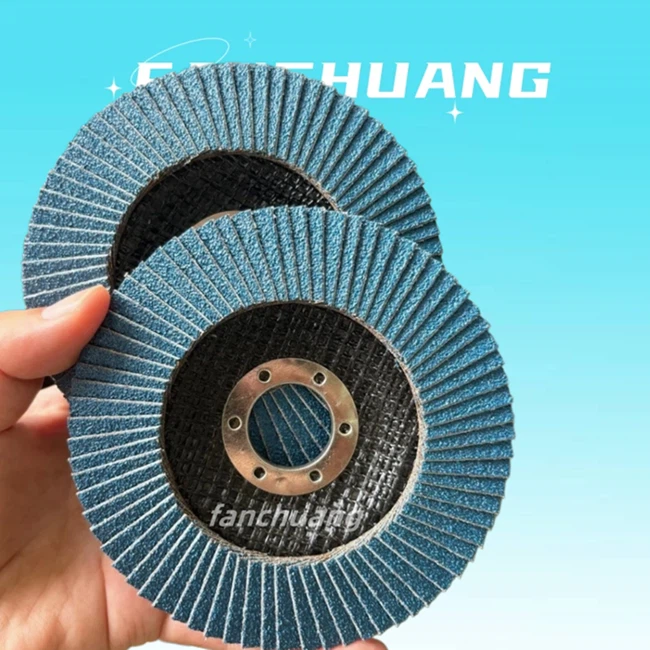
Other Abrasive Options
Sometimes, grinding wheels and flap discs aren't the best choice.
Sanding discs and fiber discs are better suited for fine finishing on thinner materials, often requiring a rubber backing pad and used with a hook-and-loop system.
Flap wheels are ideal for reaching into cylinders or pipes where flat discs cannot reach.
Sanding belts (wide belts) are used for flat, high-volume finishing in a controlled environment.
Service Life, Safety, and Maintenance Tips
Understanding tool wear and proper usage is central to best practices in metalworking.
For optimal efficiency, it's crucial to identify when abrasive discs are worn out. Wear typically occurs when the abrasive grains are severely worn and no longer effectively abrade. This usually happens when the abrasive wears down close to the edge of the rigid backing plate. If you notice excessive wear, tearing of the abrasive grains, or increased vibration, the disc should be replaced. Timely replacement ensures optimal results and extends tool life.
Safety Tips and Best Practices
Always follow safety guidelines:
Personal Protective Equipment: Wear a full face shield, gloves, and appropriate respiratory protection.
Rotational Speed: Never exceed the maximum rotational speed indicated on the grinding wheel or disc.
Pressure: Apply even, appropriate pressure. Avoid excessive force when using grinding wheels to prevent overheating and premature wear.
Grinding Wheel Angle: When using grinding wheels, use a small angle (5-15 degrees) to maximize contact area and extend lifespan.
Flat Surface: Ensure the workpiece is securely fixed before beginning any surface treatment.
The main difference between grinding wheels and flap discs lies in their geometry: one is designed to withstand rigid forces, the other for flexible fine finishing. By using grinding wheels for maximum material removal and flap discs for a better surface finish, you'll master the key tool selection needed for all your metalworking projects.