




Main Uses of Cryolite
 Mar 20, 2026|
 Cryolite belongs to the white monoclinic crystal system and is slightly soluble in water. Molten cryolite can dissolve alumina. Cryolite is commonly used as a flux in the electrolytic aluminum industry. It can be used to produce milky white glass and is also a light-blocking agent for enamel.
Uses of Cryolite:
Cryolite can be used as a flux in aluminum electrolysis and as a wear-resistant additive in grinding products. Adding cryolite significantly improves grinding and cutting forces, and shortens and extends service life and shelf life. Cryolite can also be used as a solvent for ferroalloys, molten steel, and non-ferrous metals; a deoxidizer in casting; a catalyst for olefin polymerization; an anti-reflective coating in glass; an emulsifier in enamel; and also as an emulsifier for glass, a flux in welding materials, and a filler for ceramics.
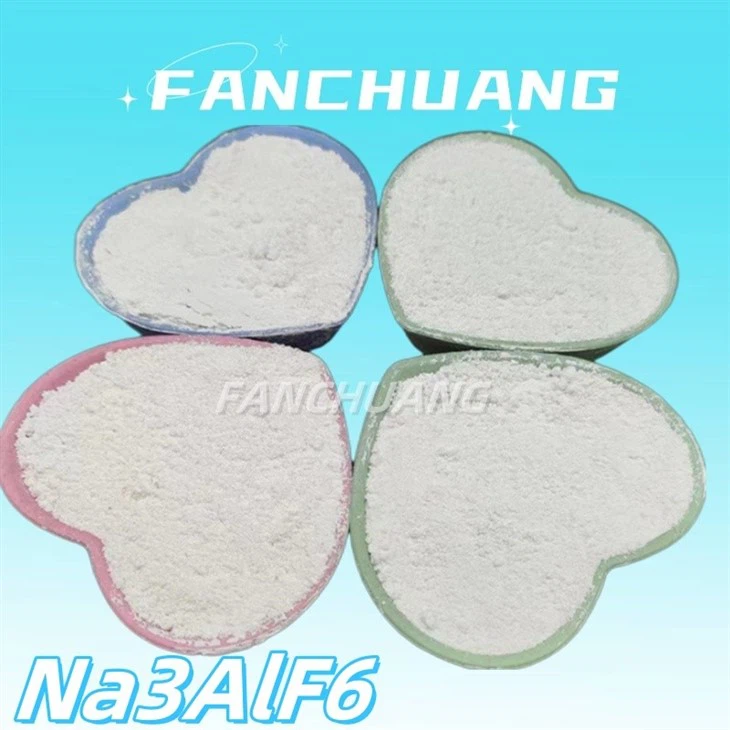
Main Purpose:
Cryolite is very rare in nature; most cryolite used in industry is artificially synthesized. Cryolite is used as a flux, additive, deoxidizer, catalyst, emulsifier, and filler in aluminum electrolysis, abrasive products, ferroalloys, non-ferrous metals, enamel, glass, and ceramics industries.
Industrial Quality Requirements:
The aluminum industry remains the largest user of cryolite. As a flux in electrolytic aluminum smelting, cryolite has strict requirements regarding its sodium-to-aluminum ratio, impurity content, and water content.
Firstly, a higher sodium-to-aluminum ratio in cryolite results in higher current efficiency in aluminum electrolysis, thereby reducing fluorine loss and environmental pollution. High-molecular-weight cryolite is also suitable for aluminum removal in other industries.
Secondly, the content of impurities such as silica, iron oxide, and phosphorus pentoxide in cryolite must be strictly controlled, as these impurities affect the quality of aluminum ingots and current aluminum smelting efficiency.
Finally, the water content of cryolite must be controlled; the lower the water content, the better, as the presence of water increases cryolite consumption.