Potassium Sulphate Whisker
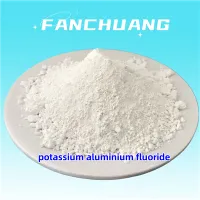
Potassium Sulphate Whisker,normally it is called US-Potassium Sulfate, UK-Potassium Sulphate, SOP-Sulphate Of Potash, is the inorganic compound with white water-soluble solid,it is commonly used in fertilizers/manufacturing of ceramics and glass, in recent years, potassium sulfate was developed to adding in resin.

- Product Introduction
What is Potassium Sulphate Whisker
Potassium Sulphate Whisker,normally it is called US-Potassium Sulfate, UK-Potassium Sulphate, SOP-Sulphate Of Potash, is the inorganic compound with white water-soluble solid,it is commonly used in fertilizers/manufacturing of ceramics and glass, in recent years, potassium sulfate was developed to adding in resin.
Why Choose Us
Professional team
We have a team of skilled and experienced professionals who are well-versed in the latest technology and industry standards. Our team is dedicated to ensuring that our customers get the best service and support possible.
Competitive prices
We offer our products at competitive prices, making them affordable for our customers. We believe that high-quality products should not come at a premium, and we strive to make our products accessible to all.
Rich experience
Has a long-standing reputation in the industry, which makes it stand out from its competitors. With over many years of experience, they have developed the skills necessary to meet their clients' needs.
Efficient and convenient
The company has established marketing networks around the world to provide high-quality services to customers in an efficient and convenient manner.
Quality assurance
In terms of quality assurance, the company strictly follows the standards and norms of the industry quality system. Adopt industry-leading testing equipment to ensure product quality and good reputation.
Customer satisfaction
Providing after-sales services can enhance customer satisfaction by ensuring that customers' needs are met even after the purchase. This can lead to increased customer loyalty and positive word-of-mouth referrals.

Zirconia Alumina Abrasive Belt
Wear resistant,not easy to break
Suitable for stainless steel grinding and polishing
High strength and strong tensile resistance
zirconium corundum abrasive.

Fiberglass Backing Plate For Flap Disc
No glue penetration
High purity fiberglass mesh with resin
Type27,type28,type29
Suitable for various abrasive and grinding discs.

High temperature resistence
Moderate toughness
Good self-sharpening
High degree of purity

Fine material selection
Grinding and finishing in one-step
Many specification to be chosen
High-quality plastic backing.

We used Raymond mill machine of Hongxing brand to producing sodium cryolite,output and quality is assured,customized grit and packing is accepted,all lot production are tested through the third party testing department before dispatching,the free sample could be provided.

Grinding Wheel Accessories Metal Ring
metal ring for cutting and grinding discs; different materials such as zinc-plated,tin-plated steel,stainless steel; many dimensions for your grinding wheels.
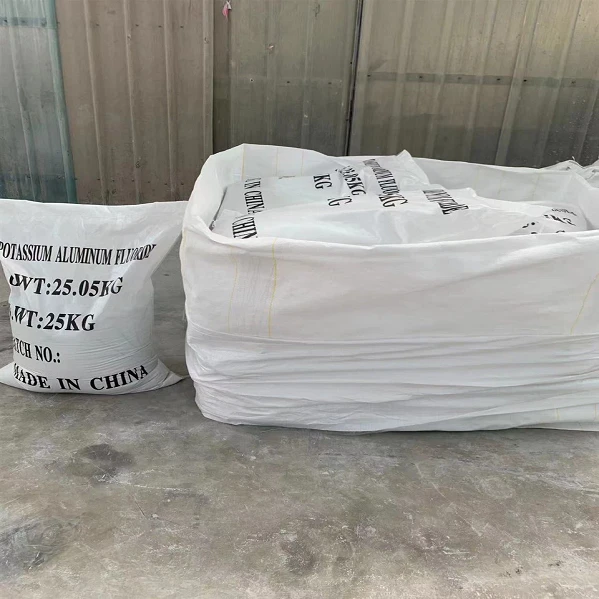
Our optimum grade raw material of Potassium Aluminum Fluoride is from the most reputed vendors of the industry, our best advantage is high quality level and stable, controllable grits could meet client's various requirements,most of customers are from abrasive wheels industrial ,our annual sales which supplied to cutting & grinding plants are more than 1500tons,our technology team know how to use it effective very well,it is very useful in sharpness and life for cutting & grinding wheels.
CSW is popular and widely used in Resin wheels industry,we have profissional technology team to support how to use CSW well,CSW is sold well in domestic market depend on our competitive price,free trial sample is welcomed.

Our iron pyrite powders make the resin-bonded grinding wheels stronger,last longer,cut deeper and more efficiently,our experienced technology team know very well how to use materials properly in grinding/cutting manufacturing industry,free sample testing is welcomed.
Characteristics and Usage of Potassium Sulfate
Potassium fertilizer is the most common fertilizer for us. Do you know what kinds of fertilizers there are? Potassium chloride, potassium nitrate, potassium sulfate, potassium dihydrogen phosphate, and wood ash are all very good potassium fertilizers. Potassium sulfate is the most commonly used in orchards. It is water-soluble, has a high utilization rate, and is moderately priced. It can add color to the expansion of fruits and improve the quality.
One acre of orchard uses about 150 kilograms a year. It can be buried, broadcast, or dripped. The method of use is flexible and convenient. Good quality potassium sulfate can also be used for foliar spraying. It has obvious effects on the expansion and cracking of fruits and is also very cost-effective. However, attention should be paid to the time and concentration of use. Potassium sulfate has many benefits and should be used scientifically.
Excessive or frequent use will also cause soil acidification, leading to manganese poisoning of crops or blackening and rotting of roots. Therefore, long-term use of potassium sulfate should be combined with some organic fertilizers, alkaline fertilizers, lime and other acidification fertilizers. It is best to use it in rotation with other potassium fertilizers, so that the nutrition will be more comprehensive.
Synthesis of Potassium Hexatitanate Whiskers Starting from Metatitanic Acid and Potassium Carbonate and Sulfate by Calcination Method
Potassium hexatitanate whiskers were synthesized starting from metatitanic acid (H2TiO3), potassium carbonate and sulfate by calcination method. The effects of mole ratios of K2CO3 to metatitanic acid (H2TiO3), content of potassium sulfate, and calcination temperature on the crystallinity and morphology of the resultant potassium titanate whiskers were investigated by X-ray diffraction and scanning electron microscopy. Well crystallized potassium hexatitanate whiskers with an average length of 7.3 μm and an average diameter of 0.62 μm were synthesized when the molar ratio of K2CO3 to metatitanic acid was kept at 1:3.5 and the calcination temperature was up to 1150 °C. The presence of K2SO4 favored the formation of thin potassium hexatitanate whiskers as compared to the absence of K2SO4. The whiteness and brightness of the synthesized potassium hexatitanate whiskers were comparable to that of rutile TiO2 pigment.
First of all, there are two major categories of potash fertilizers, one is single-element potash fertilizers, and the other is compound fertilizers containing potassium. Common single-element potash fertilizers include potassium chloride, potassium sulfate, and potassium silicate. Potassium chloride: divided by origin, there are two types: red and white; the appearance is divided into block, powder and irregular granules; the potassium oxide content (expressed as K2O%) is generally 60% for imported products and 57% or 60% for domestic products. Potassium sulfate: generally white crystalline particles or powder. Some products are slightly variegated due to impurities. Domestic potassium sulfate includes those produced in Lop Nur or Taiwan, generally containing 50% K2O, and those produced in Germany are 54%. Potassium silicate: dark gray powder, an industrial by-product, the content can only be confirmed through testing, generally K2O is 10% to 14%, and it is alkaline. Common potassium-containing compound fertilizers, the potassium content of ternary compound fertilizers can be seen from the packaging bag: N-P2O5-K2O. Binary compound fertilizer - potassium nitrate: white crystalline particles, rarely seen in the market. Secondly, it is very complicated to distinguish the authenticity of potash fertilizers, and it must be solved by testing in the end. The simple identification method of potash fertilizer introduced here is only a qualitative identification method, which cannot identify the potassium content and has limited effect. One is the iron sheet burning method: put a few fertilizer particles (large or small) on a red-hot iron sheet and burn them. Those that do not melt, have no odor, and bounce when heated can be roughly identified as potash fertilizers. If the iron sheet is tilted so that the fertilizer particles are directly burned at high temperature, colored flames will appear. Golden and shiny flames are sodium, and light yellow with lavender flames are potassium. There is also a type of powdered potash fertilizer, which can be brick red, light red or white. The identification method is also to burn it on an iron sheet. Potash fertilizers are insoluble and odorless; while phosphate fertilizers are light gray, and although they are also insoluble, they have an odor. Additional explanation: If the fertilizer particles on the iron sheet melt after high temperature and there is thick smoke, those with ammonia smell are ammonium nitrogen fertilizers, and those that only melt without ammonia smell may be nitrates; if the fertilizer particles on the iron sheet do not melt or jump, but have a sour or bone smell, they may be phosphate fertilizers. The second method is to dip the saturated potassium fertilizer solution on the wire ring, burn it on a high-temperature flame, and observe the flame color, but it is difficult to distinguish the flame colors of potassium and sodium. However, if you encounter inferior potassium fertilizers outside the routine on the market, such as small pieces or powders of potassium feldspar that have not been purified, you can only determine the content of soluble potassium through chemical analysis. The combustion method alone can only be qualitative, not quantitative, that is, it can only distinguish the true and the false, but not the superior and inferior. Therefore, when farmers choose to buy fertilizers, they should go to regular sales outlets to avoid being deceived.
What Is the Solubility of Potassium Sulfate Whiskers
Potassium sulfate is a common inorganic salt with the chemical formula K2SO4. Its solubility is affected by many factors, such as temperature, pressure, and solute interactions.
Solubility is closely related to temperature. Generally, as the temperature increases, the solubility of potassium sulfate will also increase. According to literature data, at room temperature (about 25), the solubility of potassium sulfate is about 11.5 grams per 100 milliliters of water. As the temperature rises to 100 degrees Celsius, the solubility is about 110 grams per 100 milliliters of water. It can be seen that the solubility of potassium sulfate at high temperature is much greater than that at room temperature.
Since potassium sulfate is an ionic compound, it will decompose into ionic forms of K+ and SO4-2 when dissolved in water. This ion dissociation process is endothermic. Therefore, solubility is also related to solute interactions. Because of this characteristic, potassium sulfate can be used as an ice de-icing agent, absorbing heat in the process of combining with ice, lowering the melting point of ice, and accelerating melting.
The properties of the solvent will also affect the solubility of potassium sulfate. For example, if ammonia water is used as a solvent, potassium sulfate can react with ammonia water to form ammonium sulfate. Therefore, the solubility of potassium sulfate also depends on the composition of the solvent.
The solubility of potassium sulfate is most closely related to temperature. As the temperature increases, the solubility will also increase. At the same time, other factors such as the properties of the solvent will also have a certain impact on its solubility. The high solubility of potassium sulfate makes it widely used in many fields, such as agriculture, chemical industry, etc.
Method for Preparing Potassium Sulphate and Coproducing Potassium Hydroxide
The invention provides a method for preparing potassium sulphate and coproducing potassium hydroxide. The method comprises the following steps: respectively dissolving KHSO4 and Ca(OH)2 and performing slurry mixing; then, reacting for 1.5h at 90-100 DEG C, controlling the reaction temperature, filtering the hot reaction solution, washing with hot water, filtering, regulating the pH value of filter residue with sulfuric acid to be acidic, thus obtaining CaSO4; adding methyl alcohol to the filtrate, mixing, performing filtering separation to obtain solid K2SO4 and mixed filtrate; distilling the obtained mixed filtrate to obtain methyl alcohol, water and residual raffinate respectively; performing evaporating concentration and cooling clarification on the residual raffinate to obtain 45-50% potassium hydroxide solution. The method disclosed by the invention has the advantages of simple process, high product quality and use of low-price raw materials and therefore can be put into industrial production easily; in addition, by distilling the mixed filtrate containing methyl alcohol, the recycling of resources can be realized and moreover the byproduct potassium hydroxide has relatively high economic value.

Pure potassium sulfate is a colorless crystal, and agricultural potassium sulfate is mostly light yellow in appearance. Potassium sulfate solubility: 110 g/L (20℃), easily soluble in water, insoluble in ethanol, acetone, and carbon disulfide. Potassium chloride and ammonium sulfate can increase its solubility in water, but it is almost insoluble in a saturated solution of ammonium sulfate. Function and use It is the basic raw material for making various potassium salts such as potassium carbonate and potassium persulfate. It is used as a precipitant in the glass industry. It is used as an intermediate in the dye industry. It is used as an auxiliary agent in the spice industry. It is also used as a laxative in the pharmaceutical industry and to treat soluble barium salt poisoning. Potassium sulfate is a commonly used potassium fertilizer in agriculture, with a potassium oxide content of 50%. It is commonly known as "white garri" in Taiwan. In addition, potassium sulfate is also used in glass, dyes, spices, and medicine in industry.
How to Safely Handle Potassium Sulfate Whiskers
Handling potassium sulfate requires strict adherence to safety procedures to ensure safety. Here are the steps to safely handle potassium sulfate:
Wear personal protective equipment
Before handling potassium sulfate, be sure to wear personal protective equipment such as protective glasses, protective clothing, chemical gloves and protective masks to prevent injuries caused by direct contact with chemicals.
Prevent mixed reactions
Potassium sulfate and other substances (especially those that are prone to gas) should not be mixed together. Be sure to carefully understand the chemical properties of potassium sulfate and other substances to avoid unpredictable reactions.
Control operations in well-ventilated areas
Ensure that operations are performed in well-ventilated areas to help remove harmful gases and vapors and reduce potential risks.
Careful handling and storage
When handling potassium sulfate, use dedicated containers and ensure that they are intact. Potassium sulfate should be stored in a dry, well-ventilated place, away from combustible materials and organic matter.
Emergency treatment measures
If leaks or splashes into the eyes or skin, emergency treatment measures should be taken immediately. For leaked substances, dilution, neutralization and absorption can be used to treat them, and ensure that there are no other hazards. In case of eye or skin contact, rinse with plenty of water and seek medical help.
Regular training and education
To ensure safe handling of potassium sulfate, operators should receive regular training and education, understand safe operating procedures, and be familiar with emergency response methods.
Our Factory
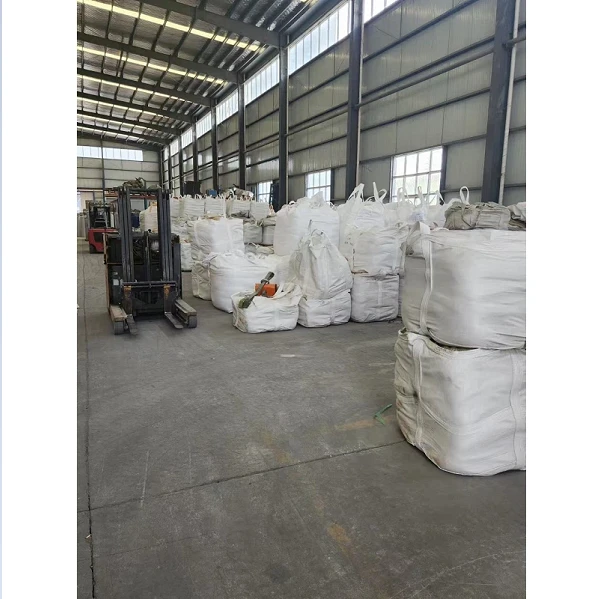
Zhengzhou Fanchuang Science and Technology Co., Ltd. is located in Zhengzhou City, Henan Province-the center of China's abrasive and grinding industrial. We are manufacturer of abrasive and grinding wheels. More than ten years development, we have gradually established various production to cover abrasive and grinding industrial. We have reached a leading level in the industry in terms of the quality of related raw and auxiliary materials, the processing efficiency of machine equipment, and the rationality of production processes, Our company is not only an approved supplier of well-known domestic abrasive tool manufacturers, but also has established cooperation with world-renowned abrasive tool companies in the Middle East and Southeast Asia. With stable product quality, timely supply, and technical support, we have received comprehensive praise from customers.

FAQ
Hot Tags: potassium sulphate whisker, China potassium sulphate whisker manufacturers, suppliers, coated abrasive wheels, yellow glassfiber net, tinplate metal ring, cas no 1309 36 0, whisker sulphate, high strength backing pads