




Comparison of White Corundum and Brown Corundum
 Jul 31, 2025|
 White corundum, often abbreviated as WFA, is a high-purity synthetic abrasive made primarily from aluminum oxide. It is made by melting high-quality aluminum oxide in an electric arc furnace and is known for its superior whiteness and transparency.
This abrasive is highly sought after in industries that require precision and low contamination. In the electronics industry, for example, WFA is used to polish semiconductor components because of its fine grain structure and low iron content, which prevents unwanted discoloration.
A key advantage of WFA is its high refractoriness, with a melting point of over 2000°C, making it ideal for high-temperature applications. According to industry data from the International Abrasives Association, WFA accounts for about 20% of the global fused corundum market, driven by the demand for precision manufacturing.
Brown corundum (BFA) is another synthetic abrasive derived from bauxite. It is made by melting bauxite and iron filings in an electric arc furnace, which gives it its distinctive brown color and tougher texture.
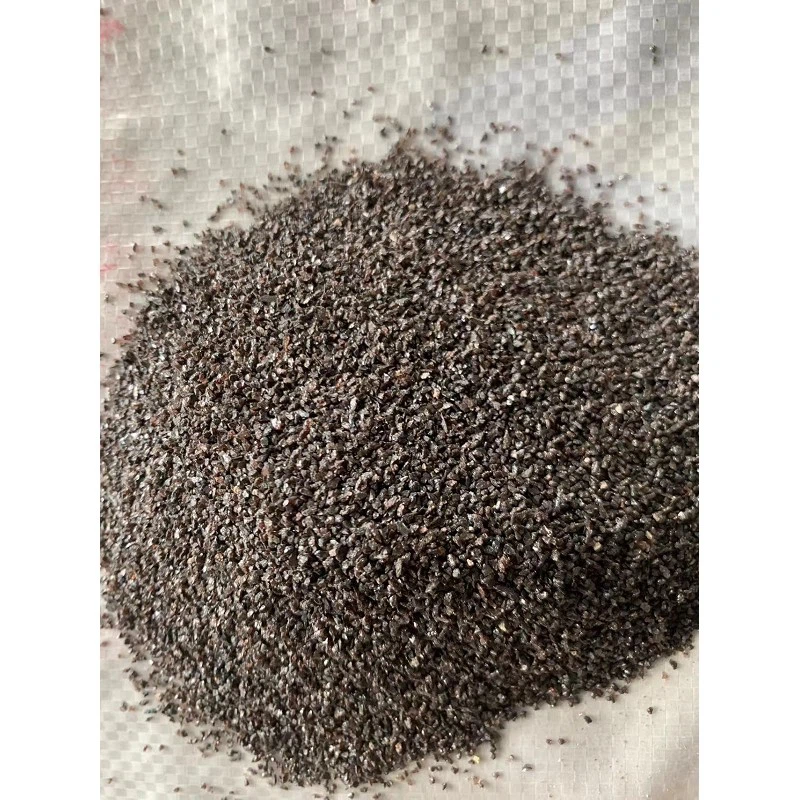
BFA is widely recognized for its durability and cost-effectiveness, making it a must-have for heavy-duty applications such as sandblasting and grinding. For example, in the automotive industry, BFA is used to remove rust from metal surfaces due to its ability to withstand high impact without breaking.
Market statistics show that BFA dominates the abrasives industry, accounting for more than 70% of global fused corundum production. This is mainly due to its affordability and versatility, as reported in sources such as the U.S. Geological Survey Mineral Commodity Summary.
Production Process
The production of white corundum begins with pure aluminum oxide powder, which is melted in an electric furnace at temperatures above 2000°C. The molten aluminum oxide powder is then cooled and crushed into various particle sizes to ensure its uniformity and high purity.
In contrast, the production of brown corundum requires mixing bauxite with coke and iron as reducing agents. This mixture is heated in a furnace, and impurities such as titanium and silica are mixed into it, resulting in a stronger but less pure product.
The key difference is energy efficiency; WFA production requires purer raw materials, which increases costs, while BFA uses more readily available bauxite and is therefore cheaper to produce. Data from abrasive manufacturers show that BFA uses about 15-20% less energy per ton of processing than WFA, highlighting its economic appeal for large-scale production.
Physical and chemical properties
White corundum has a Mohs hardness of 9, similar to BFA, but is purer, with an aluminum oxide content of more than 99%. This makes it less likely to cause chemical reactions during use, making it ideal for sensitive applications.
Although brown corundum has a hardness of 9 on the Mohs scale, it contains 3-5% impurities such as titanium dioxide and iron oxide, which enhances its toughness but reduces its whiteness. For example, the density of brown corundum is about 3.9 g/cm3, slightly higher than the 3.95 g/cm3 of white corundum, which affects its performance in grinding wheels.
In terms of thermal properties, WFA has better thermal shock resistance and can withstand rapid temperature changes up to 1800°C without cracking. BFA, on the other hand, is more resistant to fracture under mechanical stress.
Main Performance Comparison
Color: WFA is pure white, BFA is brown due to metallic impurities.
Purity: WFA typically contains more than 99% Al2O3, while BFA is 95% pure.
Hardness: Both have a Mohs hardness of 9, but WFA has a sharper edge and wears more finely.
Density: WFA is 3.95 g/cm³ and BFA is 3.9 g/cm³, which affects material removal rate.
Fragility: WFA is more brittle and breaks down faster when polishing, while BFA is tougher and suitable for heavy grinding.
The comparison shows how the performance differences directly affect the material selection based on project needs.
Industrial Applications
White corundum is often used in precision industries such as optics and electronics. For example, in lens manufacturing, WFA's fine grain provides scratch-free polishing to ISO-specified surface finishes of less than 0.1 microns.
In contrast, brown corundum excels in rough applications such as metal fabrication. A practical example is its ability to effectively remove coatings and corrosion in shot peening in shipbuilding, with field tests showing that it can remove them 50% faster than other abrasives.
For kiln refractory linings, WFA's high purity prevents contamination and extends the life of ceramic production kilns. Meanwhile, BFA is the preferred choice for woodworking tool bonded abrasives, providing extended life and cost savings in high-volume production.
Comparative Analysis
When comparing white and brown corundum, cost is the main factor. White corundum is 20-30% more expensive due to its higher purity, but it provides superior results in applications that require very low residues, such as aerospace components.
However, BFA offers better value for mass production. A case study from a European grinding wheel manufacturer showed that switching to BFA reduced production costs by 15% while maintaining the performance of common tools.
Take, for example, a grinding task: WFA can remove 1-2 grams of material per minute with finer control, making it ideal for delicate surfaces; while BFA removes up to 5 grams per minute, making it faster for heavy-duty jobs. Performance indicators in abrasive testing laboratories also support this difference.
Ultimately, the choice depends on factors such as the required polishing quality and budget. For example, in the automotive industry, WFA is used for final polishing of engine parts, while BFA is used for initial shaping and deburring.
In summary, white corundum and brown corundum each have their own advantages in industrial applications, with white corundum WFA excelling in purity and precision, while brown corundum BFA combines toughness and economy. Understanding these differences allows companies to optimize processes, reduce costs and improve product quality. Whether you are in foreign trade or manufacturing, choosing the right abrasive based on this analysis can lead to better results and long-term success.