




Green Silicon Carbide vs. Brown Corundum for Sandblasting
 Aug 15, 2025|
 In the world of industrial abrasives, choosing the right sandblasting material can significantly impact efficiency, cost, and results. Green Silicon Carbide and Brown Corundum are two common choices, each with unique properties that make them suitable for specific applications. This article explores the differences between them to help B2B professionals in foreign trade make informed decisions when sourcing these materials for manufacturing and surface treatment projects.
What is Green Silicon Carbide?
Green Silicon Carbide is a synthetic abrasive made from high-purity silica sand and carbon through a high-temperature process. Its crystal structure gives it its unique green color and excellent hardness.
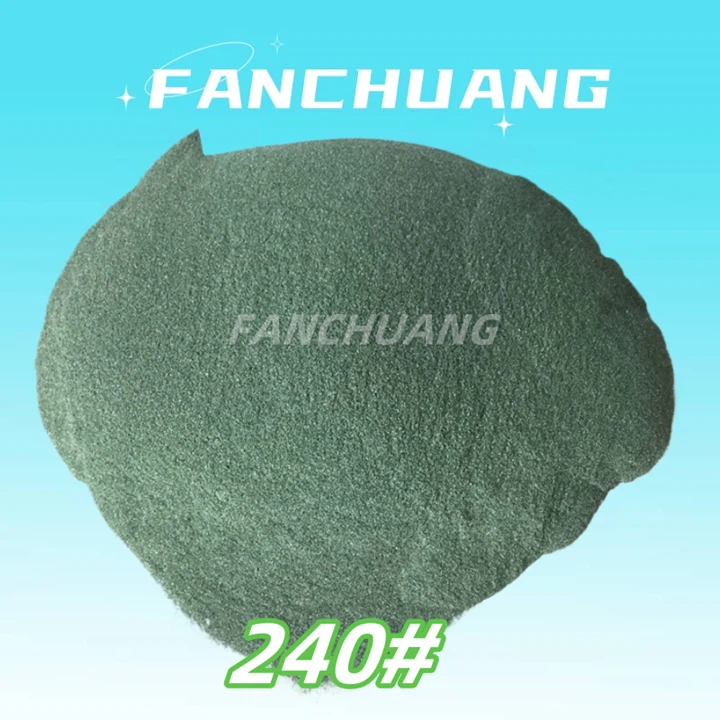
With a Mohs hardness of approximately 9.5, this material is one of the hardest abrasives available. In the sandblasting process, it is highly praised for its ability to make precise, clean cuts on delicate surfaces without causing excessive damage.
Its key properties include high thermal conductivity and resistance to chemical reactivity, making it ideal for applications in high temperatures or corrosive environments. B2B suppliers often highlight its fine grain size, which ranges from 16 mesh to 240 mesh, for excellent surface treatment results in precision industries.
Due to its high purity, green silicon carbide is often used in fields such as electronics, optics, and aerospace where quality control is critical. Foreign trade professionals should note that green silicon carbide is generally more expensive than other abrasives, which reflects its superior performance.
What is brown corundum?
Brown corundum, also known as brown fused alumina, is an aluminum oxide-based abrasive that is smelted from bauxite. Its brown hue comes from impurities such as iron oxide, which enhance its toughness.
It has a Mohs hardness of about 9.0, slightly lower than green silicon carbide, but has excellent durability and impact resistance. This makes it ideal for heavy-duty sandblasting jobs that require extreme durability.
Brown corundum abrasives are available in a variety of grit sizes, from a coarse 8 for aggressive sandblasting to a fine 220 for smoother surfaces. Brown corundum abrasives are widely praised for their cost-effectiveness and ability to handle large-scale jobs without quickly breaking down.
In the B2B sector, this material is a staple in the automotive, construction, and metal manufacturing industries. Traders in foreign markets often highlight its affordable price and abundant supply in bulk, making it a practical choice for high-volume sandblasting needs.
Application of Green Silicon Carbide vs. Brown Corundum in Sandblasting
Sandblasting relies on abrasives to remove rust, paint or contaminants from the surface, and the choice between green silicon carbide and brown corundum depends on the specific job requirements. Green silicon carbide excels in fine details and precision machining.
For example, it is often used in the electronics industry to etch circuit boards or clean sensitive components without changing their shape. Its sharp edges produce uniform surface effects, reducing the need for secondary polishing.
Brown corundum, on the other hand, is more suitable for high-intensity applications, such as coating metal surfaces or deburring large components. The toughness of brown corundum allows it to withstand repeated impacts and is suitable for long-term sandblasting operations.
In foreign trade, B2B buyers may choose green silicon carbide for high-value, professional exports, while brown corundum is suitable for bulk orders in general manufacturing. Both materials can be recycled in closed-loop systems, promoting the sustainability of industrial processes.
Key Differences in Properties and Performance
One of the key differences is hardness and brittleness. Green silicon carbide is harder and more brittle, and during the blasting process it breaks down to form a new sharp edge, allowing for consistent cutting results.
In contrast, brown corundum is tougher, less prone to rapid decomposition, and lasts longer under demanding conditions. This affects performance: green silicon carbide removes material faster on hard surfaces, while brown corundum is better suited to softer substrates.
From a cost perspective, green silicon carbide is more expensive due to its production process and purity, and is generally more expensive on the international market. Brown corundum is more abundant and easier to produce, making it more valuable for everyday use.
From an environmental perspective, green silicon carbide produces less dust in some cases due to its higher precision, but both materials require appropriate dust collection systems to meet global safety standards. B2B professionals should evaluate these factors based on the size of the project and regulatory requirements.
Advantages and Disadvantages of Each Material
The advantages of green silicon carbide include superior sharpness and finishing quality, making it ideal for complex blasting processes. It minimizes surface damage and extends the life of products in high-tech applications.
However, its disadvantages are also obvious: it is more expensive and wears faster with frequent use, which may increase operating costs for B2B users. In addition, its brittleness means it is not suitable for high-intensity sandblasting operations.
Brown corundum stands out for its durability and price advantage, providing reliable performance for large projects. It is versatile and can process a variety of materials from metals to ceramics without frequent replacement.
However, it may not achieve the same precision as green silicon carbide, resulting in rough surfaces and requiring additional processing. For foreign trade experts, weighing these pros and cons against customer needs is crucial to optimizing the supply chain.
When to choose green silicon carbide instead of brown corundum
For projects that require high precision, such as the production of optical lenses or aerospace components, green silicon carbide is ideal. It is able to provide clear and detailed processing results, making it an indispensable material for quality-oriented industries.
In contrast, when sandblasting large quantities in construction or automotive pre-processing, brown corundum should be selected. The cost-effectiveness and durability of brown corundum make it the first choice for operations where speed and durability are more important than fine details.
In B2B foreign trade, factors such as import tariffs, supplier availability in regions such as China or the United States, and customer specifications all influence selection. Always test materials to ensure compatibility with the blasting equipment.
Ultimately, the decision comes down to balancing performance, budget, and environmental impact. For example, if a project involves exporting to a market with strict emission standards, the lower dust emissions of green silicon carbide may be more advantageous.