




Why is silicon carbide powder black and green?
 Jan 20, 2026|
 Black silicon carbide is made from quartz sand, petroleum coke, and high-quality silicon dioxide as the main raw materials, melted at high temperature in a resistance furnace. The raw materials for green silicon carbide are roughly the same as those for black silicon carbide, except that industrial salt is added as a reactant and catalyst, and the reaction takes place in a resistance furnace. Because of its green color, it is called green silicon carbide. Besides the difference in color, generally speaking, green silicon carbide has better sharpness, while black silicon carbide has better toughness.
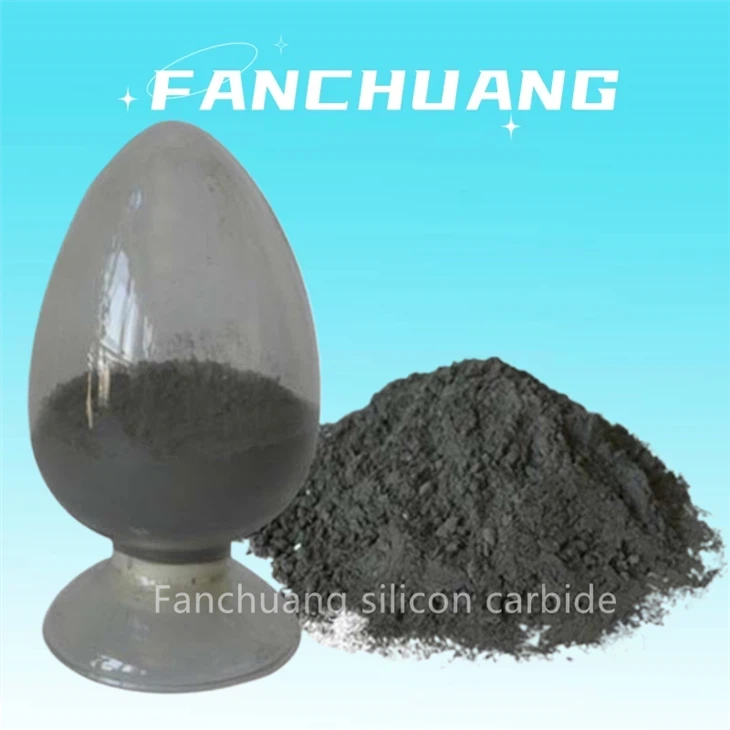
Their uses are also different. Green silicon carbide has a purer texture and higher hardness than black silicon carbide. Its grinding uses are the same as black silicon carbide, but it is more suitable for fine grinding of materials such as thread grinding and tool grinding. The grinding material has a wider range of applications, suitable for grinding workpieces made of cemented carbide and diamond products. (Ferroalloy.com) Black silicon carbide is made from quartz sand, petroleum coke, and high-quality silicon dioxide as the main raw materials, melted at high temperature in a resistance furnace.
The manufacturing raw materials for green silicon carbide are roughly the same as those for black silicon carbide, except that industrial salt is added as a reactant and catalyst, and the reaction takes place in a resistance furnace. Because of its green color, it is called green silicon carbide. What are the differences between black and green? Besides the difference in color, generally speaking, black silicon carbide has better toughness. The uses of silicon carbide are also different. Green silicon carbide has a purer texture and higher hardness than black silicon carbide. Its grinding uses are the same as black silicon carbide, but it is more suitable for fine grinding of materials such as thread grinding and tool grinding. The grinding material is more widely used for workpieces made of cemented carbide and diamond products.
Why does industrial silicon carbide appear black or green? One view is that the reason silicon carbide appears black is that the crystals are coated with tiny carbon particles. If no salt is added, because silicon dioxide volatilizes rapidly, the carbonaceous material does not have time to react with it, resulting in some silicon dioxide vapor escaping, and the carbonaceous material not being completely reacted, leaving tiny carbon particles in the already formed silicon carbide crystals. In the production of green silicon carbide, it is often said that more salt should be added compared to the smelting of black silicon carbide, because salt can promote the green color of the silicon carbide product.
However, after extensive long-term experiments, some manufacturers have found that if the raw materials contain a large amount of impurities (aluminum, calcium, magnesium, boron, etc.), it is impossible to smelt pure green silicon carbide. Conversely, if the raw materials are of high purity, bright green silicon carbide can be smelted without adding salt. Sometimes, adding salt during the smelting of green silicon carbide can have some side effects, such as increased leakage of furnace materials and the furnace body, and increased corrosion of equipment and the workshop. Therefore, more attention needs to be paid to the use of salt during the silicon carbide smelting process.