




Why are silicon carbide powders black and green?
 Aug 27, 2025|
 Black silicon carbide is made from quartz sand, petroleum coke, and high-quality silica stone, smelted at high temperatures in a resistance furnace. Green silicon carbide uses similar raw materials to black silicon carbide, with the addition of industrial salt as a reactant and accelerator, and then reacts in a resistance furnace. Its color is green, hence the name.
Aside from the color difference, green silicon carbide generally offers greater sharpness, while black silicon carbide offers greater toughness. Their applications differ, however. Green silicon carbide is purer and harder than black silicon carbide. Its abrasive uses are similar to those of black silicon carbide, and it is more suitable for thread grinding, fine grinding of abrasive tools, and other materials.
It is also widely used as an abrasive material for workpieces made from cemented carbide and diamond products. (Ferrano Alloy Spot Network) Black silicon carbide is made from quartz sand, petroleum coke, and high-quality silica stone, smelted at high temperatures in a resistance furnace.
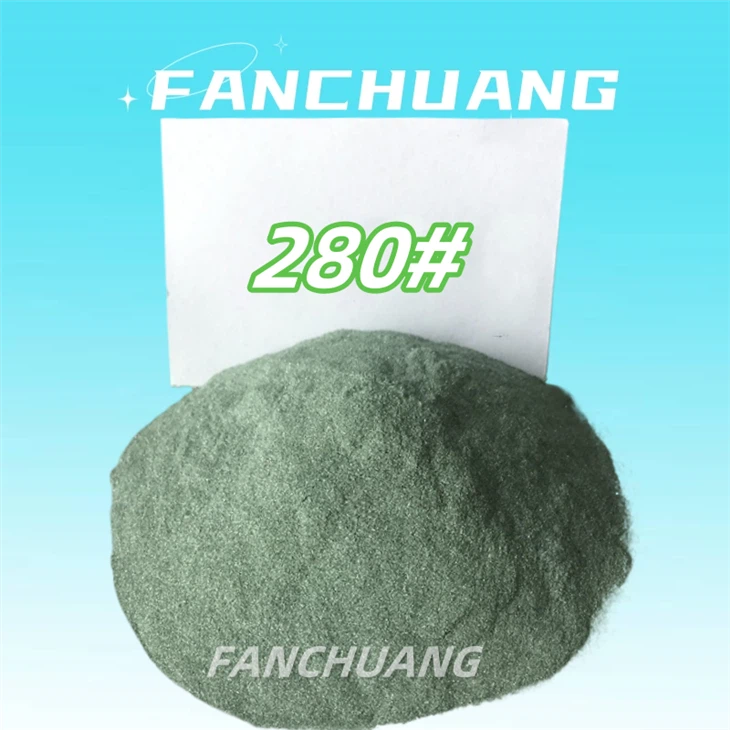
Green silicon carbide and black silicon carbide are made from similar raw materials. Industrial salt is added as a reactant and accelerator, and the reaction is carried out in a resistance furnace. Its color is green, hence the name. How can black and green silicon carbide be distinguished? Besides the color difference, black silicon carbide generally has greater toughness. Why are these two types of silicon carbide different, and what are their applications?
Green silicon carbide is purer and harder than black silicon carbide. Its abrasive uses are similar to those of black silicon carbide, and it is more suitable for thread grinding, fine grinding of abrasive tools, and other materials. Abrasive materials are more widely used in workpieces made of cemented carbide and diamond products.
Why does industrial silicon carbide appear black or green? Some believe that the black color is due to the encapsulation of the silicon carbide crystals by fine carbonaceous particles. Without the addition of salt, the silicon dioxide evaporates quickly, leaving carbonaceous substances without sufficient time to react with it. This results in some silicon dioxide vapor escaping, but the carbonaceous substances do not fully react, leaving fine particles within the formed silicon carbide crystals. In the production of green silicon carbide, it's often said that more salt is added during the smelting of black silicon carbide, as salt promotes the greenness of the product. However, after extensive and long-term experiments, some manufacturers have found that when the raw materials contain high levels of impurities (such as aluminum, calcium, magnesium, and boron), pure green silicon carbide cannot be produced. Conversely, if the raw materials are too pure, a vibrant green silicon carbide can be produced even without the addition of salt.
Sometimes, adding salt during the smelting of green silicon carbide can have side effects, such as increased leakage from the charge and furnace, and worsening corrosion of equipment and the workshop. Therefore, greater care must be taken with the use of salt during the silicon carbide smelting process.
Fanchuang is one of the leading suppliers of silicon carbide powder. If you are interested, please feel free to contact us.